
Eli had already committed to providing exclusive breastfeeding for her children. However, some people believe that breastfeeding alone is not enough for babies. This is the challenge Eli faced from her neighbors.
“In the past, when I was striving to provide exclusive breastfeeding for 6 months, many neighbors told me to give solid food to my baby,” Eli recalled. This made Eli feel disturbed and uncertain while breastfeeding Naza. Naza was born with a normal weight of 2.7 kg, slightly above the low-birth-weight threshold of 2.5 kg.
Before knowing about EmoDemo, Eli was already a fighter for exclusive breastfeeding. She followed the advice of midwives and health workers at the time to not give any food other than breast milk to her baby until 6 months old. However, sometimes Eli felt anxious when Naza cried after breastfeeding. Eli lived only with her husband and children, not with her parents or in-laws, so she did not experience pressure or influence from them regarding feeding the baby. However, Eli had relatives she sometimes consulted about parenting.
When Naza cried after breastfeeding, Eli shared her feelings with one of her relatives. Instead of supporting Eli to provide exclusive breastfeeding, the relative suggested giving food to the baby.
“Once, Naza kept crying. I told my relatives, and they suggested to give her solid food. I still did not want to. So, I just carried my baby and rocked her until she eventually stopped crying,” said Eli, who is also a housewife.
Learn about Providing Nutritious Food for Children through Emo-Demo
When the Better Investment for Stunting Alleviation (BISA) program by Save the Children and Nutrition International (NI) was implemented at the local health post where Eli lived, she began to learn about Emo-Demo through frequent visits. Emo-Demo is a communication approach to change the behavior of mothers or caregivers in feeding infants and young children. At that time, Naza was about 3 years old. According to a health worker in the village, Naza’s height was slightly below the standard for her age, which made Eli a bit anxious.
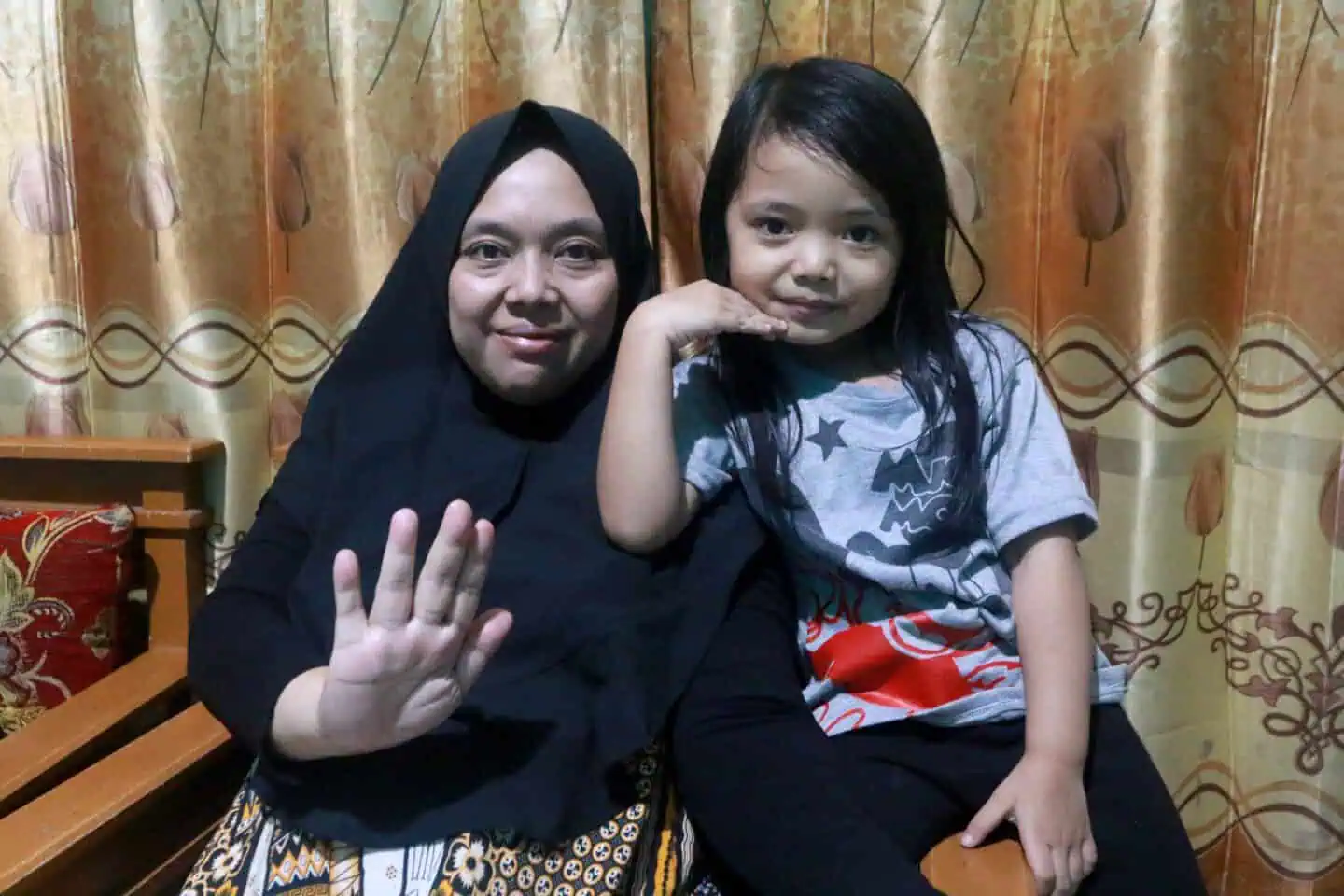
Eli admitted that before participating in Emo-Demo, she used to give Naza instant snacks less than an hour before mealtime. As a result, Naza’s appetite decreased when she was supposed to eat nutritious main meals. After participating in Emo-Demo, Eli changed her approach. Naza no longer ate snacks less than an hour before mealtime. Consequently, Naza ate more nutritious food, and her weight growth improved.
Unlike the usual method of delivering information, Emo-Demo uses practical approaches with easy-to-understand examples. It covers not only solid food feeding but also breastfeeding.
For example, to explain that babies aged 0-6 months only need breast milk, health workers who practicing Emo-Demo compared the size of a baby’s stomach to a marble. This information stuck in Eli’s mind and touched her heart.
“The health worker (informed by the midwife) said, ‘not yet, not yet, because a baby’s stomach is still small, like a marble,’ in Emo-Demo,” Eli mimicked the health worker’s words about the belief that babies under 6 months can be given solid food. For Eli, this explanation made her feel more empathetic towards babies under 6 months who do not receive exclusive breastfeeding.
“Yes… finally I understood, it’s pitiful for the baby if given food,” Eli expressed her empathy.
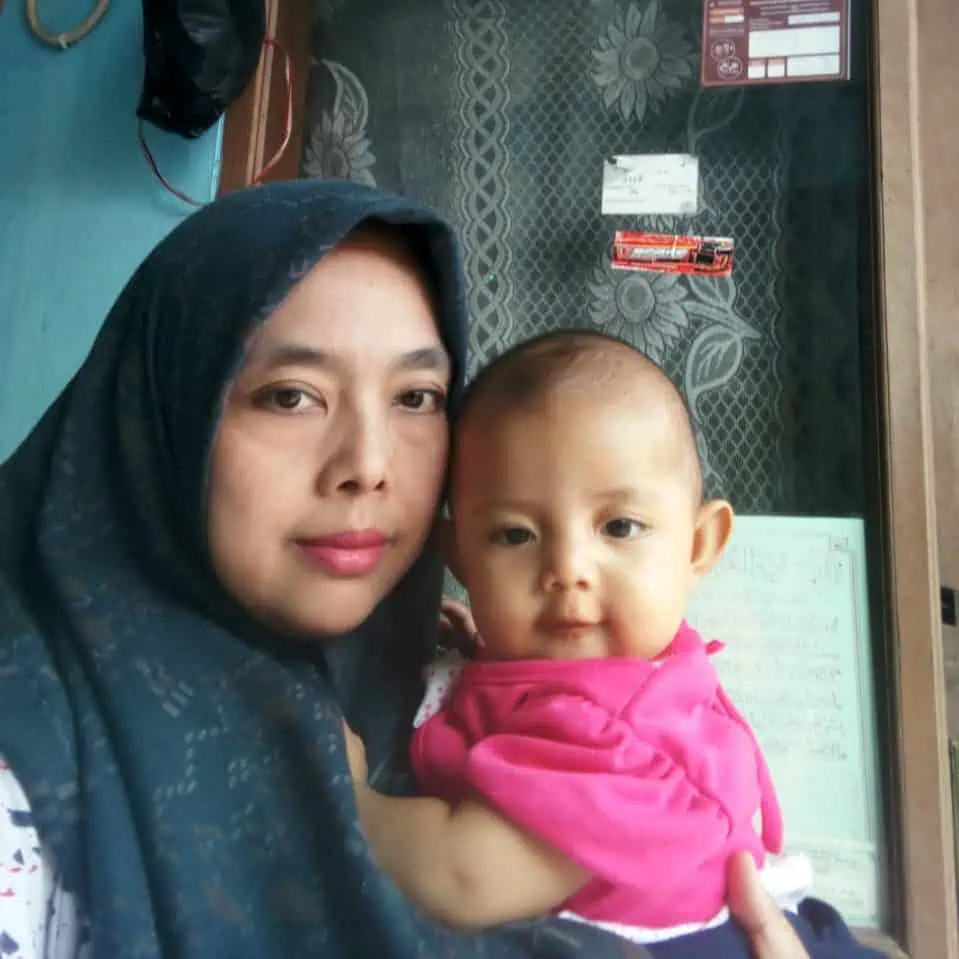
When Eli gave birth to her third child, Nabila, she provided exclusive breastfeeding without the anxiety she experienced in previous breastfeeding experiences. The support she received from health workers practicing Emo-Demo boosted Eli’s confidence in providing exclusive breastfeeding. The health worker convinced Eli that with a baby’s stomach only the size of a marble, breast milk alone was sufficient. Besides the health worker, her husband also supported Eli in providing exclusive breastfeeding. Now, Eli is exclusively breastfeeding her third child, who is approaching 5 months old this month (August 2024).
Social Factors and Self-Confidence Influencing Exclusive Breastfeeding
The final study results of the BISA program in several areas concluded that while the Emo-Demo approach successfully increased knowledge, in practice, external factors such as social support played a significant role. Social barriers or lack of social support also emerged in previous studies on exclusive breastfeeding. For example, a study conducted in Central Java revealed that husbands and extended families of breastfeeding women could negatively influence exclusive breastfeeding by offering formula milk as a substitute. Living with extended families sometimes risks negative influences for breastfeeding mothers. This situation did not occur for Eli, who lived only with her husband and one of her siblings.
Additionally, Eli received support from her husband to provide exclusive breastfeeding. Persuasive approaches from midwives and health workers can also boost a mother’s confidence in providing exclusive breastfeeding, as experienced by Eli. A study in West Java also confirmed the importance of a mother’s confidence that they can provide exclusive breastfeeding. This confidence stems from persuasive actions from others, especially those knowledgeable about breastfeeding, such as midwives and trained health workers. Moreover, confidence is also determined by successful experiences, like Eli, who had already provided exclusive breastfeeding to her two previous children.
“Afraid the baby might get sick or have stomach issues (if given solid food). From the health post, I learned that it is okay to give only breast milk. Babies are also full of just breast milk, that is what motivated me to give breast milk, not food,” said Eli, who only learned that a baby’s stomach under 6 months is the size of a marble after participating in Emo-Demo.
Eli’s experience proves the importance of social support, including persuasive actions, to boost a mother’s confidence in providing exclusive breastfeeding, encouraging the success of exclusive breastfeeding practices.