
“In essence, if we don’t understand something, rejection happens. I once rejected the idea of PATBM; I thought it was useless at the time,” explained Kolim (43), a village head in Central Sulawesi.
In the village where Kolim works, the Community-based Integrated Child Protection (PATBM) group was established to help address issues related to child protection and build financial literacy. In its early days, the PATBM group was looked down upon by the villagers.
Stien (53), a cocoa farmer from the same village, recalls that time. She became one of the PATBM cadres in 2019 when the group was newly formed by Save the Children and partner in a program supported by Cargill. There were initially 19 active PATBM cadres, but this number dwindled after a few months. Stien was one of the few who remained. They conducted outreach on children’s rights and child abuse issues to the community.
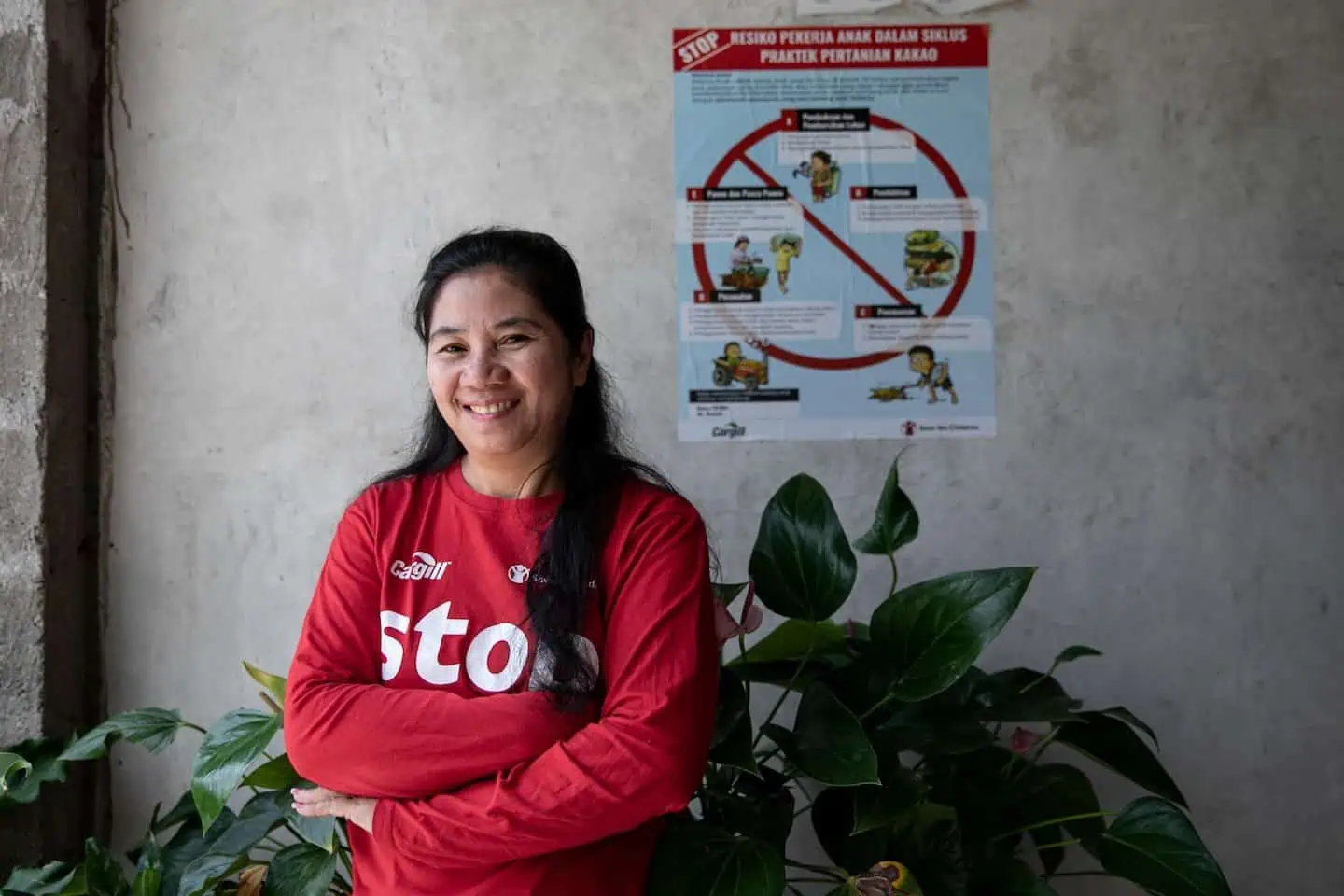
Initially, some villagers thought that PATBM would make children more unruly and uncontrollable. Stien patiently explained that PATBM was not about encouraging delinquency but about fulfilling children’s rights and providing valuable learning for them.
“During the outreach, someone said, ‘If my child does something wrong, I will hit them.’ I then explained, ‘I’m sorry, but there are limits to hitting a child; there are limits to teaching a child,'” Stien recalled.
“In line with the training we received, I said, ‘Let’s, as parents, understand that a five-year-old’s memory can store what they see and feel, whether from family or outside. If we set an example of harsh discipline in the family, that’s what they will replicate. They might rebel when they grow up,'” she added.
In 2021, there was a change in the village administration, including the village head and the PATBM chair. Stien was elected as the new PATBM Chair. However, during the early stages of this transition, PATBM activities were temporarily halted due to rejection by Kolim, the new village head. According to Kolim, the PATBM program was no longer needed.
The reason was a misunderstanding. After re-establishing communication and participating in several activities, Kolim began to understand the purpose of PATBM and became very open. He also supported and built good cooperation with the PATBM group. One event that changed his perspective was when PATBM successfully resolved a child abuse case at a school.
He saw how PATBM worked with the right persuasive strategies. According to Kolim, the government cannot always be the appropriate mediator to address community issues.
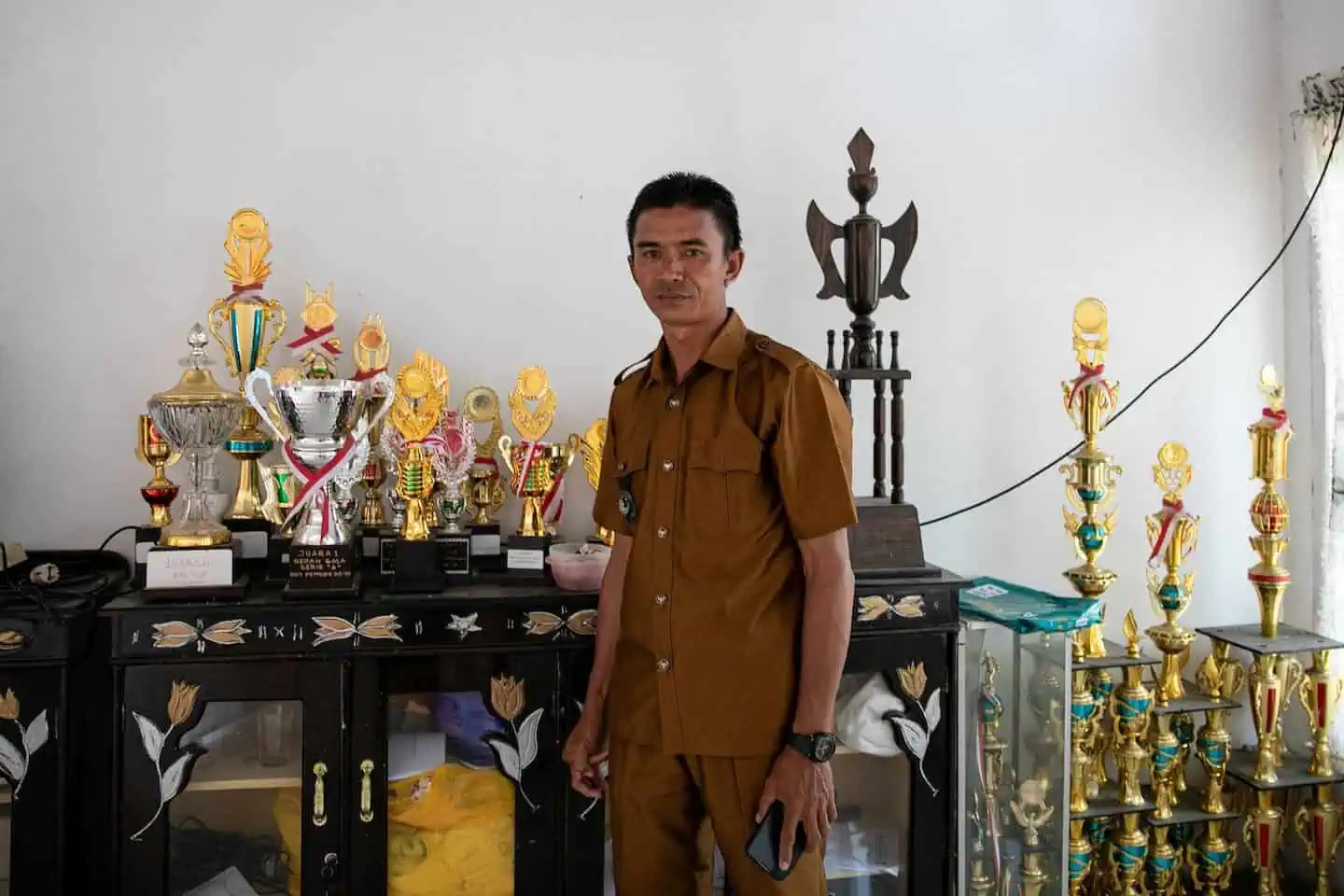
However, there was still resistance from some residents. Kolim recounted that some villagers submitted a vote of no confidence against PATBM. In response, the village government supported PATBM and reassured the community. Stien and other cadres continued to conduct outreach. They visited schools and places of worship.
Kolim admitted that the village government learned about several types of cases from PATBM that had never been on their radar. For instance, school dropouts that were not recorded in government data. He observed that PATBM worked without any labels, thus breaking down barriers that often arise between the community and the government.
In terms of education, Kolim also mentioned that PATBM brought awareness to previously unknown issues, such as children’s rights and the prohibition of child exploitation. The village government, which previously focused solely on physical village development, now also pays attention to community empowerment.
“So far, when there were cases, parents sometimes resolved them legally or traditionally. After PATBM was established, there was a family approach. This helped us in the government,” Kolim explained.
Over the past year, reports of child-related cases have decreased. Kolim believes this is one of the positive impacts of PATBM activities.
“We – the village government, often work on physical development, while human development is sometimes overlooked. This is where the collaboration lies, because actually, in the government program, there is also empowerment,” Kolim explained.
•••
One family that has experienced change is Ferdi’s (43), a cocoa farmer. He used to involve his 16-year-old child in working on the farm. Through outreach by PATBM, Ferdi gained insight into the limitations on children’s work, the risks of using dangerous tools for children, and the risks of carrying heavy objects. Ferdi agreed that, as a parent, he did not want to see his child get hurt while working.
After gaining insights from PATBM, he limited the time and types of work his child could do. He taught his child to use a wooden cocoa clamp. Ferdi also never required his child to work. However, he was grateful if his child wanted to accompany him to the farm.
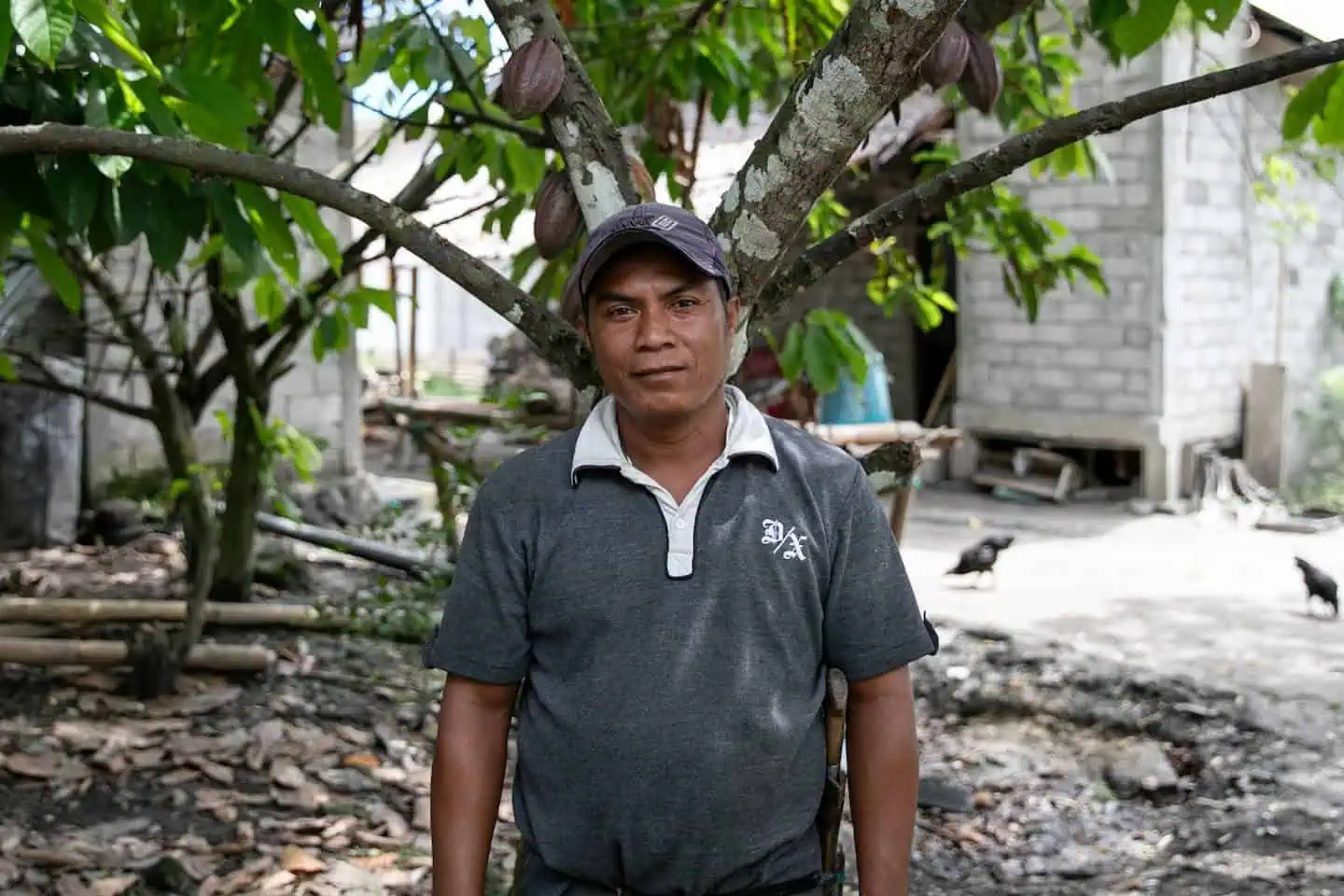
“As a parent, I enjoy taking my child to the farm. It’s someone to talk to, to relieve fatigue, and to play with. I am grateful for that. But if he wants to work, we supervise,” said Ferdi.
“I’m happy to help my parents and also happy to walk around the farm,” said Ferdi’s child, who aspires to become an architect. “But remember, I’m not allowed to use a machete.”
Since December 2023, Kolim, as the village head, has committed to allocating village funds of Rp5 million annually for PATBM activities related to children’s rights issues and to fund the children’s Supplementary Feeding Program (PMT). PMT is a nutrition program initiated by national government and implemented by regional government. Currently, they are also focused on creating a child-friendly village environment.
Now, the plan of Kolim, Stien, along with the village government and PATBM group is to foster a non-violent parenting mindset among parents. Previously, some parents often believed they could do anything to their children, including normalizing violence as part of educating them. They thought that violence was a way to discipline children.
A case of violence involving beating at school has been a lesson for the community. The way PATBM handled the case provided parents with a new perspective that violence is not the solution for changing a child’s behavior or attitude.
Stien also hopes they can maintain good relationships and trust so that PATBM activities can continue. Stien also plans to establish a village children’s forum and create interest or hobby groups for children. •